
A section of industry may need to begin compliance immediately, even as most states are yet to notify their rules.
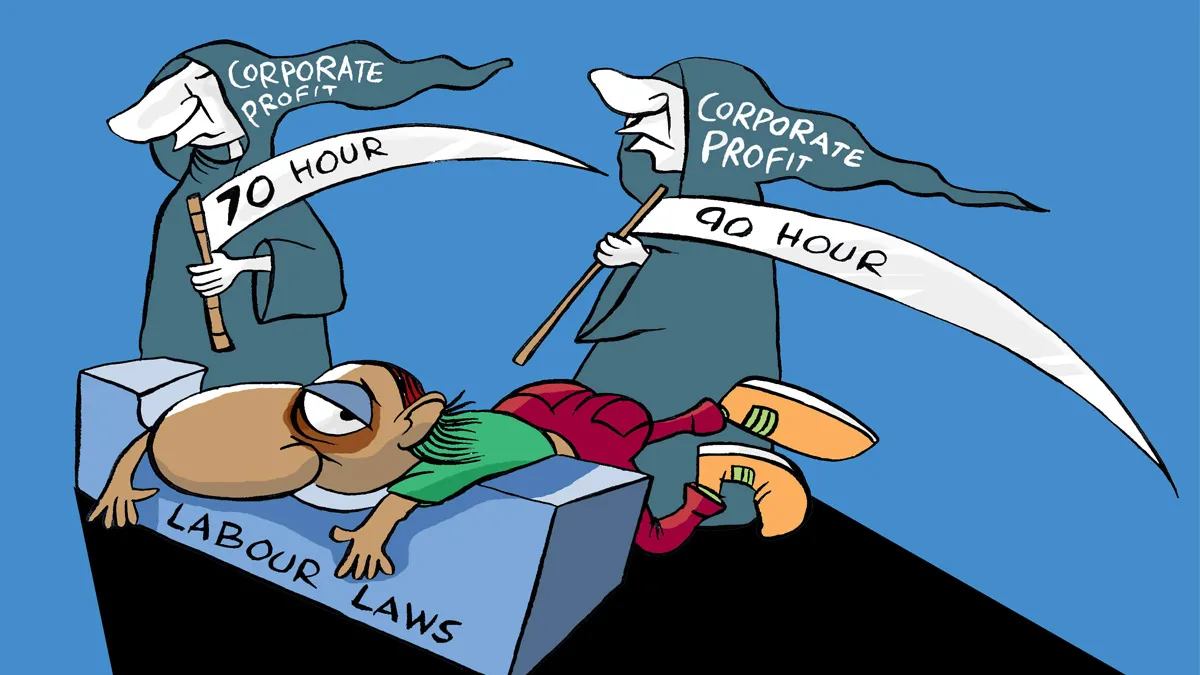
The Indian government has notified final rules under four labour codes, potentially enabling a four-day workweek in certain sectors by capping weekly working hours at 48 while allowing daily flexibility. This move also introduces significant changes to wage fixation, compliance obligations, and social security norms.
In a historic decision, the government on Friday announced the implementation of the four Labour Codes, which rationalised 29 existing labour laws, with immediate effect. The four labour codes are -- the Code on Wages, 2019, the Industrial Relations Code, 2020, the Code on Social Security, 2020 and the Occupational Safety, Health and Working Conditions Code, 2020.

Companies would have to recognise the increase in gratuity liability arising from new labour codes in their interim financial statements and results for the period ending December 31, the Institute of Chartered Accountants of India (ICAI) has said in its FAQs on the new labour codes.

India's Code on Wages mandates strict payout deadlines, two-day full and final settlements, universal wage coverage and capped deductions to safeguard employees and enhance payroll transparency nationwide.

The new labour Codes, notified by the central government in November 2025, have pushed up employee costs for private-sector banks and insurance companies, with these firms reporting higher operating expenses in the October-December quarter (Q3FY26) due to the statutory impact of the new labour Codes.

From appointment letters becoming mandatory to gig workers receiving social security to enhanced rights for women and contract labour, the changes reflect India's attempt to balance ease of doing business with stronger worker welfare.
While the move may give a competitive edge over rivals like Bangladesh in the global market, several industry bodies raised concerns that many state governments may not implement it on the ground.
'It will increase the contribution to gratuity, which is something the employer has to give.'

FIFA has announced a last-minute change to its Stadium Code of Conduct, prohibiting reusable water bottles and other containers at World Cup venues due to safety concerns. This decision, aimed at preventing injury, has raised questions among fans about coping with heat, though FIFA states measures like cooling stations will be in place.

Of course, NOT! Here's why. And here's how you can increase your Rs 1 crore retirement corpus.

A local court in Bareilly, Uttar Pradesh, has sentenced a man to life imprisonment for the murder of his mentally challenged wife. The man repeatedly electrocuted her while she was tied to a cot in their home.

'Companies will need to revisit compensation structures, contracts, staffing models, and human resources system.'
The four labour codes on wages, social security, industrial relations and occupation safety, health and working conditions are likely to be implemented by the next fiscal year as at least 13 states have pre-published draft rules on these laws, a senior official said. The Centre has already finalised the rules under these codes and now states are required to frame regulations on their part as labour is a concurrent subject. A senior official said that the four labour codes are likely to be implemented by the next fiscal year.

With Income Tax Act 2025 in force, your tax choice can quietly cost you big money if you're not paying attention. Ramalingam Kalirajan explains how
Union Labour Minister Bhupender Yadav has exuded confidence that four labour codes, which would bring another wave of reforms, will soon be implemented as around 90 per cent of states have already come out with draft rules. In 2019 and 2020, 29 central labour laws were amalgamated, rationalised and simplified into four labour codes, viz, the Code on Wages, 2019; the Industrial Relations Code, 2020; the Code on Social Security, 2020; and the Occupational Safety, Health & Working Conditions Code, 2020, noted the Survey. During an interaction, Yadav told reporters that around 90 per cent of the states have already published draft rules on four labour codes and he expects the four legislations would become operational soon.
Delhi is experiencing its first heatwave of the season, with temperatures reaching 40.2 degrees Celsius. Doctors have warned that exposure to extreme heat can lead to a range of health issues, from mild rashes and muscle cramps to serious conditions like heat exhaustion and heatstroke. They advise staying hydrated, avoiding outdoor activities during peak hours, and wearing light, breathable clothes. Vulnerable groups like children, the elderly, and those with pre-existing conditions are at greater risk.

"What would be prohibited is the creation of any fanfare and holding of ceremonies with the involvement of political functionaries," it observed.

'Every issue that Muslims are facing today affects Muslim women. But how come women's issues don't affect the community?' 'How does the community benefit by the practice of halala or polygamy?'

A series of decisions were taken under the Public Health Department, including an approval to increase honoraria for field-level workers engaged under the Ayushman BharatPradhan Mantri Jan Arogya Yojana and Mahatma Jyotirao Phule Jan Arogya Yojana.

'Nutrition is always higher when you consume fresh food. Whether it's heated, boiled, frozen or microwaved, some nutrient depletion always happens' says Dr Rajeshwari Panda.

At present, there is no provision under Drugs Rules, 1945 to address issues of wrong information to obtain regulatory approvals.
Day 6 of Parliament's monsoon session 2020. Watch all the action in both houses LIVE here.

This will help employers keep a track of the diseases workers could suffer from while doing their jobs.

A day after being sentenced to life imprisonment in a rape case, suspended Janata Dal-Secular leader Prajwal Revanna was assigned a prisoner number at Bengaluru's Parappana Agrahara Central prison, jail authorities said on Sunday.

Finance Minister Nirmala Sitharaman on Saturday said the government will arrange identity cards and registration on the e-Shram portal to assist 1 crore gig workers. Presenting the Union Budget 2025-26, the finance minister also said a scheme for the socio-economic upliftment of urban workers will be implemented.
All four labour codes are likely to be implemented in one go from April 1, the beginning of the next fiscal year, labour secretary Apurva Chandra said on Wednesday. The parliament in its just concluded session passed three labour code bills: the Industrial Relations (IR) Code, the Social Security Code, and the Occupational Safety, Health and Working Conditions Code (OSH). The Wage Code Bill, 2019 was passed by the parliament last year.

The move will help industries in pushing authorities for exemption under various labour laws at a micro-level, along with demanding changes to bring greater flexibility in their operations related to retrenchment, safety standards, and collective bargaining.
The four labour codes will not come into effect from April 1 as states are yet to finalise the relevant rules, which means that there will be no change in take home pay of employees and provident fund liability of companies for now. Once the wages code comes into force, there will be significant changes in the way basic pay and provident fund of employees are calculated. The labour ministry had envisaged implementing the four codes on industrial relations, wages, social security and occupational health safety & working conditions from April 1, 2021. The ministry had even finalised the rules under the four codes.
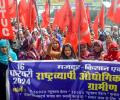
Over 25 crore workers across India are set to strike against new labour codes and privatisation, potentially disrupting banking, postal, and other essential services.
The four labour codes are unlikely to be implemented this fiscal in view of slow progress on the drafting of rules by the states and also for political reasons like elections in Uttar Pradesh, a source said. The implementation of these laws assumes significance because once these are implemented there would be reduction in take-home pay of employees and firms have to bear higher provident fund liability. "The ministry of labour is ready with the rules under the four labour codes. But the states have been slow in drafting and finalising those under new codes.

'In India, managers and the leadership almost glorify overworking.'
The Union government will take a bit longer to introduce the much-awaited labour codes even as the majority of states and Union Territories (UTs) have framed rules on them. There were speculations that these would be introduced from July 1. While 30 states and UTs have framed rules on the code on wages, 25 of them have done so on industrial relations. Of the two remaining codes, 24 states and UTs have framed rules on social security and 23 on occupational safety, health, and working conditions (OSH), sources said.

The government has introduced the Code on Wages Bill 2019 and the Occupational Safety, Health and Working Conditions Code Bill 2019 in Lok Sabha on July 23.

The implementation of four labour codes in one go from April 1 next year will usher in a new wave of reforms in industrial relations and also help in attracting more investments but employment generation will remain a key challenge in 2021. This year has also been a challenging year for the work force as well as for employers due to the outbreak of the COVID-19 pandemic. The government imposed a nationwide lockdown from March 25, which had an adverse impact on economic activities and resulted in exodus of migrant workers from large cities to their homes in the hinterland. Many migrant labourers lost their jobs and it took months for them to return back to their work places from their native places.

Labour Minister Santosh Gangwar said, the purpose of labour reforms is to provide a transparent system to suit the changed business environment.

Their implementation is expected to create investment owing to improving ease of doing business as well as initiating pro-worker measures.
Ushering in a big wave of reforms by implementing the four labour codes, setting up the national social security fund to cover over 38 crore informal sector workers and improving the ease of doing business will top the agenda of the labour ministry in the New Year. In a major move, the ministry launched the e-Shram portal on August 26, 2021 for creating a national database of over 38 crore informal sector workers. It will help the government to ensure last-mile delivery of benefits of various social security schemes to the informal-sector workers.

Working hours cannot go beyond 48. Those who give a four-day week will have to provide three consecutive holidays after that.

The norms, say industry experts, are not sufficient to weed out fly-by-night contractors.
